
Introduction
Financial freedom is a goal that many people aspire to achieve. It represents the ability to live comfortably, meet financial obligations, and pursue life goals without constant stress about money. However, financial freedom is not achieved overnight. It requires careful planning, disciplined spending, strategic saving, and smart investing. This is where personal finance management becomes essential.
Personal finance management refers to the process of organizing and controlling an individual’s financial activities, including income, expenses, savings, investments, insurance, and retirement planning. It is a lifelong practice that helps people make informed financial decisions and build long-term wealth.
In today’s world, financial challenges are becoming increasingly complex. Rising living costs, inflation, debt, and economic uncertainties make effective money management more important than ever. Individuals who understand personal finance are better equipped to handle financial challenges, avoid debt traps, and achieve financial independence.
This article explores the importance of personal finance management, its key components, practical strategies, common mistakes to avoid, and how effective financial planning can lead to financial freedom.
Understanding Personal Finance Management
Personal finance management involves planning and managing financial resources to achieve short-term and long-term goals. It includes every aspect of an individual’s financial life, from daily spending habits to retirement planning.
The primary objective of personal finance management is to ensure that income is used efficiently and effectively. It helps individuals maximize financial resources while minimizing risks and unnecessary expenses.
Personal finance management consists of several key areas:
– Income Management
– Budgeting
– Saving
– Investing
– Debt Management
– Insurance Planning
– Tax Planning
– Retirement Planning
Together, these elements create a strong financial foundation.
Why Personal Finance Management Matters
Managing money effectively has become one of the most important life skills. Financial decisions made today often have long-term consequences.
Good personal finance management helps individuals:
– Build financial security
– Reduce financial stress
– Achieve life goals
– Avoid excessive debt
– Create wealth
– Prepare for emergencies
– Enjoy greater financial independence
Without proper financial planning, even individuals with high incomes may struggle financially due to poor spending habits and lack of savings.
Setting Financial Goals
Financial success begins with clear goals.
Goals provide direction and motivation. They help individuals prioritize spending and make informed decisions.
Short-Term Goals
Short-term goals are usually achieved within one year.
Examples include:
– Building an emergency fund
– Paying off small debts
– Purchasing a laptop
– Saving for a vacation
Medium-Term Goals
These goals typically take one to five years.
Examples include:
– Buying a vehicle
– Starting a business
– Saving for higher education
Long-Term Goals
Long-term goals may take several decades.
Examples include:
– Home ownership
– Children’s education
– Retirement planning
– Wealth creation
Clearly defined goals make financial planning more effective and measurable.
The Importance of Budgeting
Budgeting is the foundation of personal finance management.
A budget is a financial plan that tracks income and expenses over a specific period.
Benefits of budgeting include:
– Better control over spending
– Increased savings
– Reduced financial stress
– Improved decision-making
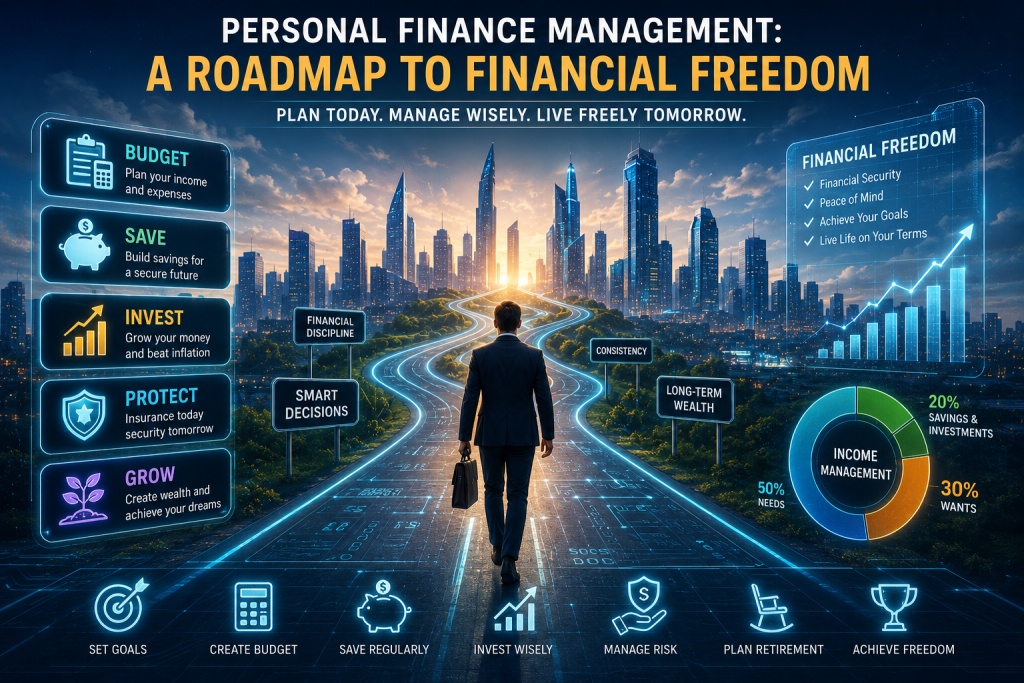
A simple budgeting method is the 50/30/20 rule:
– 50% for necessities
– 30% for wants
– 20% for savings and investments
Consistently following a budget can significantly improve financial health.
Building an Emergency Fund
Life is unpredictable. Unexpected situations such as medical emergencies, job loss, or home repairs can create financial difficulties.
An emergency fund provides financial protection during such events.
Experts generally recommend saving three to six months’ worth of living expenses.
Benefits of an emergency fund include:
– Financial security
– Reduced dependence on loans
– Peace of mind
– Better crisis management
Emergency savings should be kept in easily accessible accounts.
Saving Money Effectively
Saving is one of the most important financial habits.
Many people save what remains after spending. Successful individuals often reverse this approach by saving first and spending the remainder.
Strategies for effective saving include:
– Automating savings
– Setting saving goals
– Reducing unnecessary expenses
– Avoiding impulse purchases
– Tracking expenditures
Regular saving creates opportunities for future investments and financial growth.
Managing Debt Wisely
Debt can either help or harm financial well-being depending on how it is managed.
Good debt may include:
– Education loans
– Business loans
– Home loans
Bad debt often includes:
– High-interest credit card debt
– Unnecessary consumer loans
Effective debt management involves:
– Paying bills on time
– Avoiding excessive borrowing
– Maintaining a healthy credit score
– Prioritizing high-interest debt repayment
Reducing debt improves financial stability and increases future financial opportunities.
The Role of Investing in Wealth Creation
Saving alone is often insufficient to achieve long-term financial goals.
Investing allows money to grow through returns and compounding.
Common investment options include:
Stocks
Stocks represent ownership in companies and offer potential long-term growth.
Mutual Funds
Mutual funds pool money from multiple investors and provide diversification.
Bonds
Bonds provide fixed income and generally carry lower risk.
Real Estate
Property investments can generate rental income and capital appreciation.
Retirement Accounts
Retirement-focused investments provide long-term financial security.
Investing should align with individual goals, risk tolerance, and investment horizons.
Understanding Risk Management
Financial planning is incomplete without risk management.
Unexpected events can cause significant financial losses.
Risk management involves:
– Health insurance
– Life insurance
– Property insurance
– Disability insurance
Insurance protects individuals and families from financial hardship during emergencies.
A well-designed insurance strategy enhances financial security.
Tax Planning and Financial Efficiency
Taxes influence personal financial outcomes.
Effective tax planning helps individuals legally reduce tax liabilities and maximize savings.
Tax planning strategies may include:
– Utilizing tax-saving investments
– Claiming eligible deductions
– Understanding tax regulations
– Planning investments efficiently
Financially informed individuals often achieve better after-tax returns.
Retirement Planning
Retirement planning is a critical component of personal finance management.
Many people underestimate the amount of money needed for retirement.
Early retirement planning offers several advantages:
– Greater compounding benefits
– Lower financial pressure
– More investment flexibility
– Increased retirement security
Retirement planning should begin as early as possible, regardless of age.
Common Financial Mistakes to Avoid
Many individuals struggle financially because of avoidable mistakes.
Common mistakes include:
Living Beyond Means
Spending more than income creates financial instability.
Ignoring Savings
Failure to save can lead to financial vulnerability.
Lack of Financial Planning
Without a financial plan, goals become difficult to achieve.
Excessive Debt
High levels of debt can limit financial opportunities.
Delayed Investing
Waiting too long to invest reduces the benefits of compounding.
Neglecting Insurance
Insufficient insurance coverage increases financial risk.
Avoiding these mistakes improves long-term financial outcomes.
Personal Finance in the Digital Age
Technology has transformed financial management.
Modern financial tools include:
– Mobile banking apps
– Budgeting applications
– Online investment platforms
– Digital payment systems
– Financial planning software
These technologies make money management more accessible and efficient.
However, individuals must also remain aware of cybersecurity risks and online fraud.
Financial Freedom: The Ultimate Goal
Financial freedom means having enough financial resources to support desired lifestyles without excessive dependence on active income.
Characteristics of financially free individuals include:
– Minimal debt
– Strong savings
– Consistent investments
– Multiple income sources
– Financial confidence
Financial freedom allows people to focus on personal goals, family, career development, and life experiences.
Practical Steps Toward Financial Freedom
1. Set clear financial goals.
2. Create a realistic budget.
3. Build an emergency fund.
4. Eliminate high-interest debt.
5. Save consistently.
6. Invest regularly.
7. Obtain adequate insurance.
8. Monitor financial progress.
9. Continue financial education.
10. Remain disciplined and patient.
Financial success is built through consistent actions over time.
Conclusion
Personal finance management is the foundation of financial freedom. It enables individuals to control their money, reduce financial stress, and build long-term wealth. Through budgeting, saving, investing, debt management, insurance planning, and retirement preparation, individuals can create a secure financial future.
Financial freedom is not determined by how much money a person earns but by how effectively that money is managed. By adopting sound financial habits and maintaining a long-term perspective, anyone can improve financial well-being and move closer to achieving financial independence.
Ultimately, personal finance management is not merely about money—it is about creating opportunities, achieving goals, and living a more secure and fulfilling life.