
Introduction
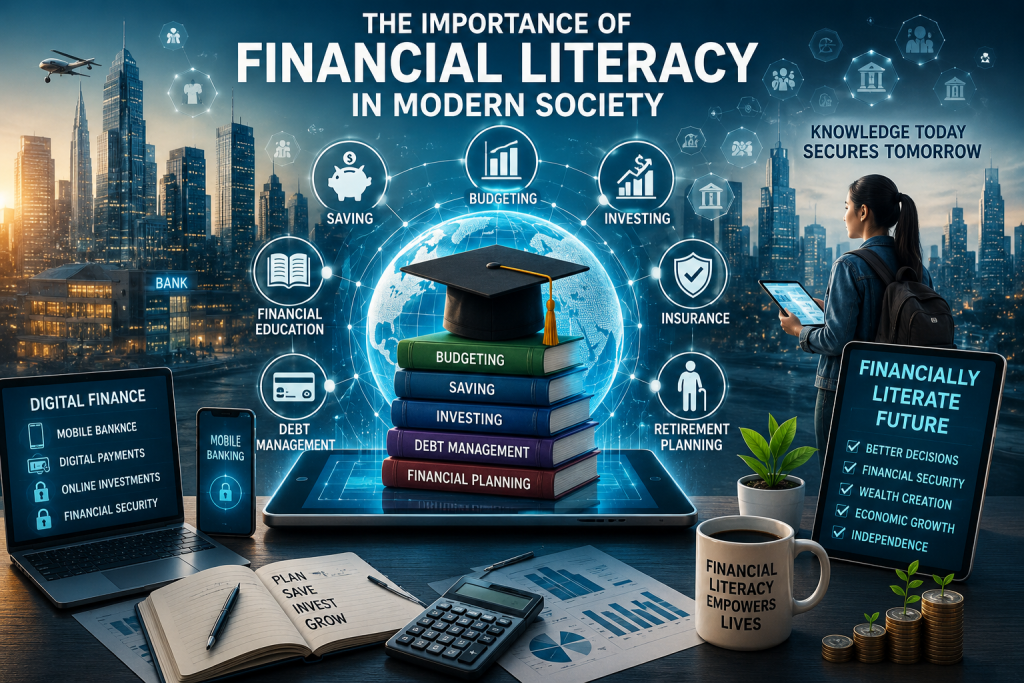
In today’s rapidly evolving world, financial literacy has become an essential life skill. The increasing complexity of financial products, digital payment systems, investment opportunities, and credit facilities makes it crucial for individuals to understand how money works. Financial literacy refers to the knowledge and skills required to make informed and effective decisions regarding financial resources. It encompasses budgeting, saving, investing, debt management, insurance, taxation, and retirement planning.
Modern society is characterized by technological advancement, globalization, and economic uncertainty. Individuals face numerous financial decisions throughout their lives, from choosing a bank account and applying for loans to investing for future goals. Without adequate financial literacy, people may fall into debt traps, make poor investment decisions, or struggle to achieve financial security.
This article explores the importance of financial literacy in modern society, its benefits, challenges, and ways to improve financial knowledge among individuals and communities.
Understanding Financial Literacy
Financial literacy is the ability to understand and effectively use various financial skills. It includes knowledge of personal finance, money management, budgeting, and investing. A financially literate person can evaluate financial options, understand risks, and make decisions that align with long-term financial goals.
The major components of financial literacy include:
– Budgeting and expense management
– Saving and emergency fund planning
– Understanding banking services
– Credit and debt management
– Investment knowledge
– Insurance planning
– Tax awareness
– Retirement planning
Financial literacy is not limited to professionals or business owners. It is a fundamental skill that benefits people of all ages and income levels.
Why Financial Literacy Matters
Financial literacy empowers individuals to make informed decisions about their money. Every financial decision has consequences, and understanding those consequences can significantly improve one’s financial well-being.
People with strong financial literacy are more likely to:
– Save regularly
– Invest wisely
– Avoid excessive debt
– Plan for emergencies
– Achieve long-term financial goals
– Maintain financial stability
In contrast, a lack of financial literacy often results in poor money management, unnecessary debt, financial stress, and vulnerability to fraud.
Benefits of Financial Literacy
1. Better Budget Management
Budgeting is one of the most important financial skills. Financial literacy helps individuals track income and expenses, identify unnecessary spending, and allocate funds efficiently.
A well-planned budget ensures that essential needs are met while also allowing for savings and investments.
2. Increased Savings
Financially literate individuals understand the importance of saving money for future needs. They develop habits that encourage regular savings and emergency preparedness.
Savings provide a financial cushion during unexpected situations such as medical emergencies, job loss, or economic downturns.
3. Improved Debt Management
Debt can be a useful financial tool when managed properly. Financial literacy helps individuals understand interest rates, repayment schedules, and borrowing costs.
This knowledge reduces the likelihood of falling into debt traps and improves creditworthiness.
4. Smart Investment Decisions
Investing is essential for wealth creation. Financial literacy enables individuals to understand investment options such as stocks, bonds, mutual funds, and retirement accounts.
Informed investors are better equipped to balance risks and returns while pursuing long-term financial goals.
5. Financial Independence
Financial literacy promotes self-reliance and reduces dependence on others for financial support. It helps individuals make independent decisions regarding spending, saving, and investing.
Financial independence contributes to greater confidence and personal freedom.
Consequences of Financial Illiteracy
Financial illiteracy can have serious consequences for individuals and society.
Common problems include:
– Excessive debt
– Poor credit scores
– Insufficient savings
– Financial fraud victimization
– Inadequate retirement planning
– Increased financial stress
Many people struggle financially not because they earn too little but because they lack the knowledge needed to manage money effectively.
Financial Literacy in the Digital Age
Technology has transformed financial services. Digital banking, online investments, mobile payments, and financial applications have increased convenience but also introduced new challenges.
Financial literacy now includes digital financial skills such as:
– Using online banking securely
– Understanding digital payment systems
– Identifying cyber fraud
– Evaluating online investment platforms
– Protecting personal financial information
Individuals who lack digital financial literacy may be vulnerable to scams and cybersecurity threats.
Financial Literacy for Young People
Teaching financial literacy at an early age is essential for building responsible financial habits.
Young people should learn:
– The value of money
– Budgeting techniques
– Saving habits
– Responsible use of credit
– Basic investment concepts
Schools and colleges can play a significant role in preparing students for financial success.
Role of Government and Educational Institutions
Governments and educational institutions have a responsibility to promote financial literacy.
Key initiatives may include:
– Financial education programs in schools
– Public awareness campaigns
– Community workshops
– Online educational resources
– Consumer protection regulations
Such efforts help create financially informed citizens who contribute positively to the economy.
Practical Steps to Improve Financial Literacy
Individuals can improve their financial literacy through several methods:
1. Read personal finance books.
2. Follow reputable financial websites.
3. Attend financial education workshops.
4. Learn budgeting techniques.
5. Understand investment basics.
6. Seek professional financial advice when necessary.
7. Use financial management applications.
Continuous learning is essential because financial markets and technologies constantly evolve.
Financial Literacy and Economic Growth
Financial literacy benefits not only individuals but also the broader economy.
A financially educated population tends to:
– Save more
– Invest more effectively
– Reduce financial instability
– Support entrepreneurship
– Contribute to economic development
Higher levels of financial literacy can lead to greater economic resilience and sustainable growth.
Conclusion
Financial literacy is a critical skill in modern society. It empowers individuals to make informed financial decisions, manage resources effectively, and achieve long-term financial security. As financial systems become increasingly complex, the need for financial education continues to grow.
By promoting financial literacy through education, awareness programs, and personal learning efforts, societies can create financially responsible citizens capable of navigating economic challenges and opportunities. Ultimately, financial literacy is not merely about understanding money—it is about building a secure, independent, and prosperous future.